The Flywheel of Virtual Value
Player utility creates demand. Demand funds creators. Creator reinvestment improves the world. Virtual value lasts only when the loop closes.
Analysis by Tu Dang · Founder of ROLearn
Published · Updated · 9-minute read
Key findings
- A virtual economy creates durable value when player attention becomes utility, utility supports spending, and creator earnings return as better supply.
- Scarcity can shape demand, but it cannot rescue an item or currency with weak use, weak identity value or no credible future.
- Sources, sinks, balances and prices diagnose the currency layer; retention, creator earnings and update velocity show whether the broader flywheel is healthy.
- The common leaks are low player utility, extractive monetization, weak creator participation, poor discovery and reinvestment that never reaches the player.
Virtual economies are often drawn as funnels. Players arrive, some players pay and revenue comes out the bottom. That picture is useful for a sales dashboard and dangerous as a design philosophy.
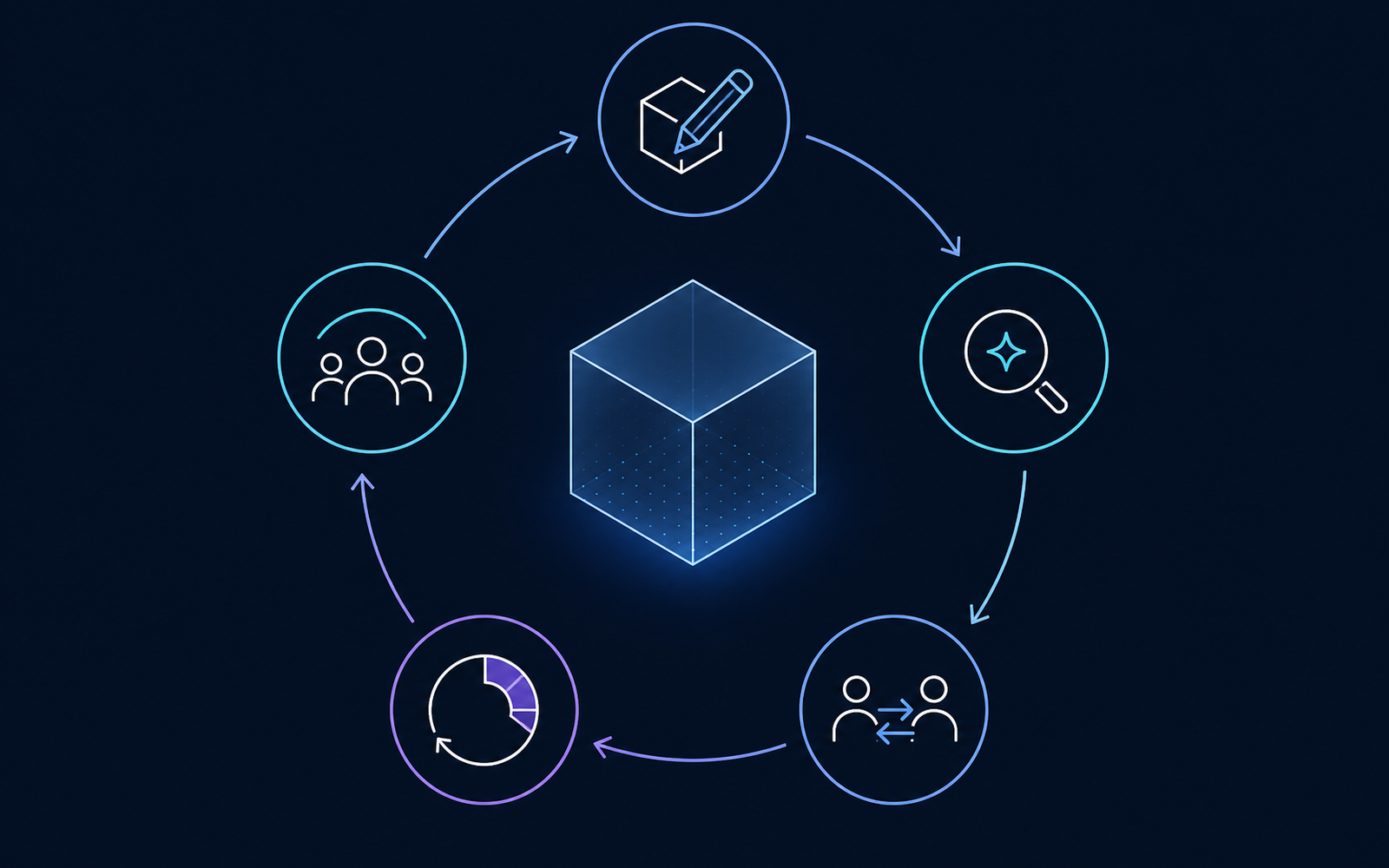
A sustainable virtual economy is a loop. Players invest attention because the world gives them utility, identity, mastery or belonging. Some of that value becomes spending. A share becomes creator income. Creators reinvest in content, systems and community. Better supply gives players another reason to return.
When the loop works, each turn increases the capacity for the next. When it breaks, more acquisition can disguise the leak for a while but cannot repair it.
Revenue is not the end of a virtual economy. It is the transfer point between value already delivered and value the ecosystem must create next.
Four kinds of value share one system
Teams get into trouble when they use “value” to mean only price.
Player value is the utility, status, expression, progress and social connection received from participating.
Currency value is confidence that a virtual balance can obtain desirable things under rules that will remain intelligible.
Creator value is the economic and creative opportunity available to people who build experiences, items, tools and communities.
Platform value is the growth, retention, safety and revenue produced by the network as a whole.
These values can move in different directions. A monetization change may raise short-term platform revenue while reducing player trust. A generous currency source may delight players while causing prices to inflate and weakening future rewards. A creator payout can increase supply while discovery remains too concentrated for most of that supply to find an audience.
The flywheel is healthy only when the system creates a repeatable gain across participants, not when one metric spikes.
The six turns of the flywheel
- 1Participate
- Play
- Create
- Socialize
- Return
- 2Receive utility
- Progress
- Identity
- Access
- Belonging
- 3Exchange
- Spend
- Earn
- Trade where allowed
- Subscribe
- 4Reward supply
- Creator earnings
- Payouts
- Commissions
- Audience
- 5Reinvest
- Live operations
- New content
- Tools
- Community
- 6Improve
- More useful worlds
- Stronger trust
- Better discovery
- New demand
The loop begins with participation, not payment. If the world has weak utility, monetization only reaches the same small group more aggressively. If player value is strong but creators cannot earn, the supply side struggles to maintain quality. If creators earn but do not reinvest, players eventually feel the stagnation.
This is why creator platforms connect engagement to economics. Epic allocates a share of eligible Fortnite net revenue through engagement payouts using factors that include active playtime, retention and player acquisition. Roblox offers several earning paths, including in-experience purchases, subscriptions, Creator Rewards, advertising, Marketplace and Creator Store sales, with eligible Earned Robux convertible through DevEx.
The mechanisms differ and change over time. Both recognize the same structural fact: the people producing player value need a route to economic value if the world is expected to keep improving.
The currency layer: sources, sinks and confidence
Inside an individual game, a currency has sources, where units enter, and sinks, where units leave. Roblox’s Economy analytics asks creators to track both, along with wallet balances, transaction categories and the balance between total sources and sinks.
That instrumentation matters because player-facing symptoms arrive late.
If sources consistently outrun useful sinks, balances can accumulate faster than desirable supply. Prices may rise, rewards feel less meaningful or a large share of currency may sit unused. If sinks outrun accessible sources, progress can feel punitive and new players may conclude that the economy is designed to block them. A healthy target depends on the game’s lifecycle and design, but the team needs to see the flows by cohort, not only the aggregate balance.
| Signal | Healthy question | Warning it may reveal |
|---|---|---|
| Currency sources by cohort | Can new, returning and advanced players earn at an appropriate pace? | Inflation, grind or rewards concentrated in one segment |
| Sinks by category | Are players voluntarily spending on things they value? | A mandatory tax, one dominant sink or no desirable use |
| Wallet distribution | Are balances circulating across the population? | Hoarding, wealth concentration or an inaccessible economy |
| Price and purchase mix | Do price points support different player needs? | Reliance on whales, deceptive urgency or weak entry offers |
| Item use after purchase | Does the good keep delivering utility or identity? | Novelty-driven purchases with rapid abandonment |
| Payer retention beside non-payer retention | Does monetization coexist with a healthy product? | Revenue rising while player trust and population quality fall |
Scarcity belongs in this layer, but it is not a business model by itself. Limited supply can support status and price discovery when demand, rights and liquidity are real. It cannot create durable utility. An item that is scarce and unwanted is still unwanted.
The creator layer: earnings become capacity
Roblox reported that creators earned more than $1 billion globally through DevEx from March 2024 through March 2025. The figure is platform-reported and the distribution of success is uneven, but the scale shows why virtual economies must be analyzed as production systems, not only item shops.
Creator earnings can pay artists, engineers, community teams and infrastructure. They can fund the next update and reduce dependence on outside capital. That is the reinvestment turn of the flywheel.
But payout does not guarantee reinvestment. Teams may withdraw, diversify or stop building. Platform policy may change the expected return. Discovery may favor a narrow group. Costs may rise faster than earnings. A platform or studio should therefore watch what economic participation enables:
- update frequency and quality;
- creator team formation and retention;
- new genres, tools and items entering the ecosystem;
- response time to bugs, safety and community needs;
- the share of successful content that remains active over time.
Revenue paid out is an input to future supply. The product effect of that input is the thing the flywheel needs.
Five places the loop leaks
Utility leak
Players arrive, but the world does not create enough fun, identity, progress or belonging to justify return. Promotions can increase the top of the funnel while the active economy stays shallow.
Trust leak
Prices, odds, urgency or rule changes feel obscure or extractive. Roblox’s own monetization guidance warns against misleading discounts, false scarcity and pressure. When trust falls, spending and social recommendation can deteriorate before revenue makes the cause obvious.
Currency leak
Sources and sinks produce balances or price behavior inconsistent with the intended progression. Aggregate stability can hide severe differences between new players, veterans and high spenders.
Creator leak
The system captures spending but too little value reaches the people responsible for content and community, or earnings are too volatile to support a team. Supply becomes repetitive, lower quality or overly optimized for short-term monetization.
Discovery leak
Good supply exists but cannot find an audience. Creators cannot learn from real players, players cannot find relevant worlds and the economy rewards promotion more than usefulness.
The operating dashboard
A virtual-economy review should connect three views that organizations often separate.
Player health: qualified active players, cohort retention, session quality, social play, satisfaction and support signals.
Economy health: sources, sinks, balances, conversion, payer concentration, item use, price stability and fraud controls.
Creator health: qualified creators, earnings distribution, update velocity, new supply, production costs, discovery and reinvestment.
Reviewing only player metrics misses the funding engine. Reviewing only economy metrics misses whether people still value the world. Reviewing only creator payouts misses whether those payouts translate into better player experiences.
The most revealing executive question is simple: when this system earns one more unit of attention or money, where does that value go next?
If the answer is better play, stronger creator capacity and a credible reason to return, the flywheel is closing. If the answer is a one-time extraction with no visible improvement to the world, the loop is already slowing, even if this month’s revenue still looks good.
Sources
- Economy Events, Roblox Creator Hub (accessed August 10, 2026)
- Monetization, Roblox Creator Hub (accessed August 10, 2026)
- Developer Exchange Program, Roblox Creator Hub (accessed August 10, 2026)
- Turn Your Creativity Into Income on Roblox, Roblox Creator Hub (accessed August 10, 2026)
- Annual Roblox Economic Impact Report, Roblox (accessed August 10, 2026)
- Engagement Payout in Fortnite Creative, Epic Games (accessed August 10, 2026)
Cite this piece
Tu Dang. "The Flywheel of Virtual Value." ROLearn Intelligence, July 23, 2026. https://intelligence.rolearn.dev/analysis/flywheel-of-virtual-value
About the author
Tu Dang is founder of rolearn. Tu Dang is the founder of ROLearn, a market-intelligence platform used by developers, studios, and brand teams working inside virtual worlds.